
Creating safer boundaries between work and home
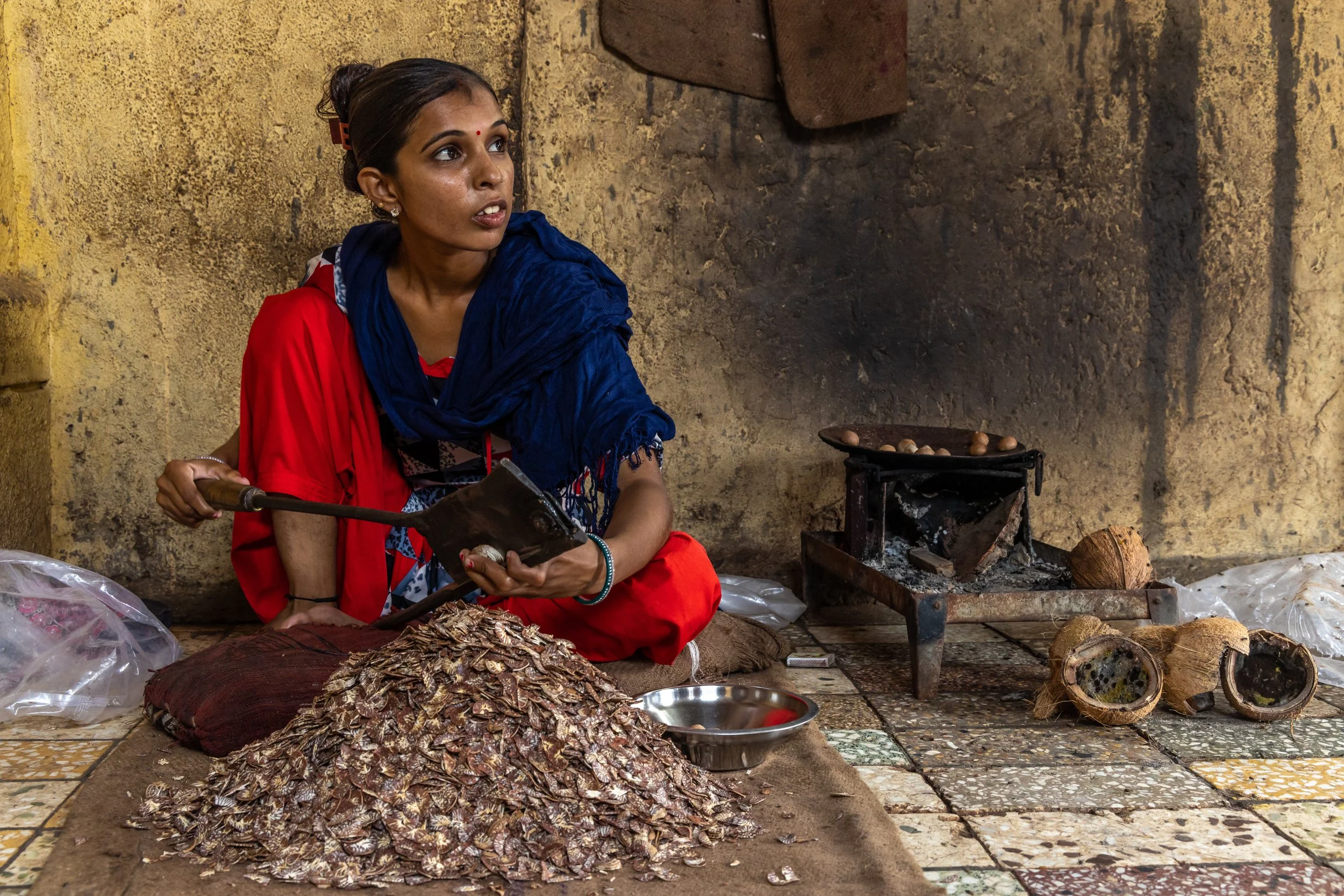
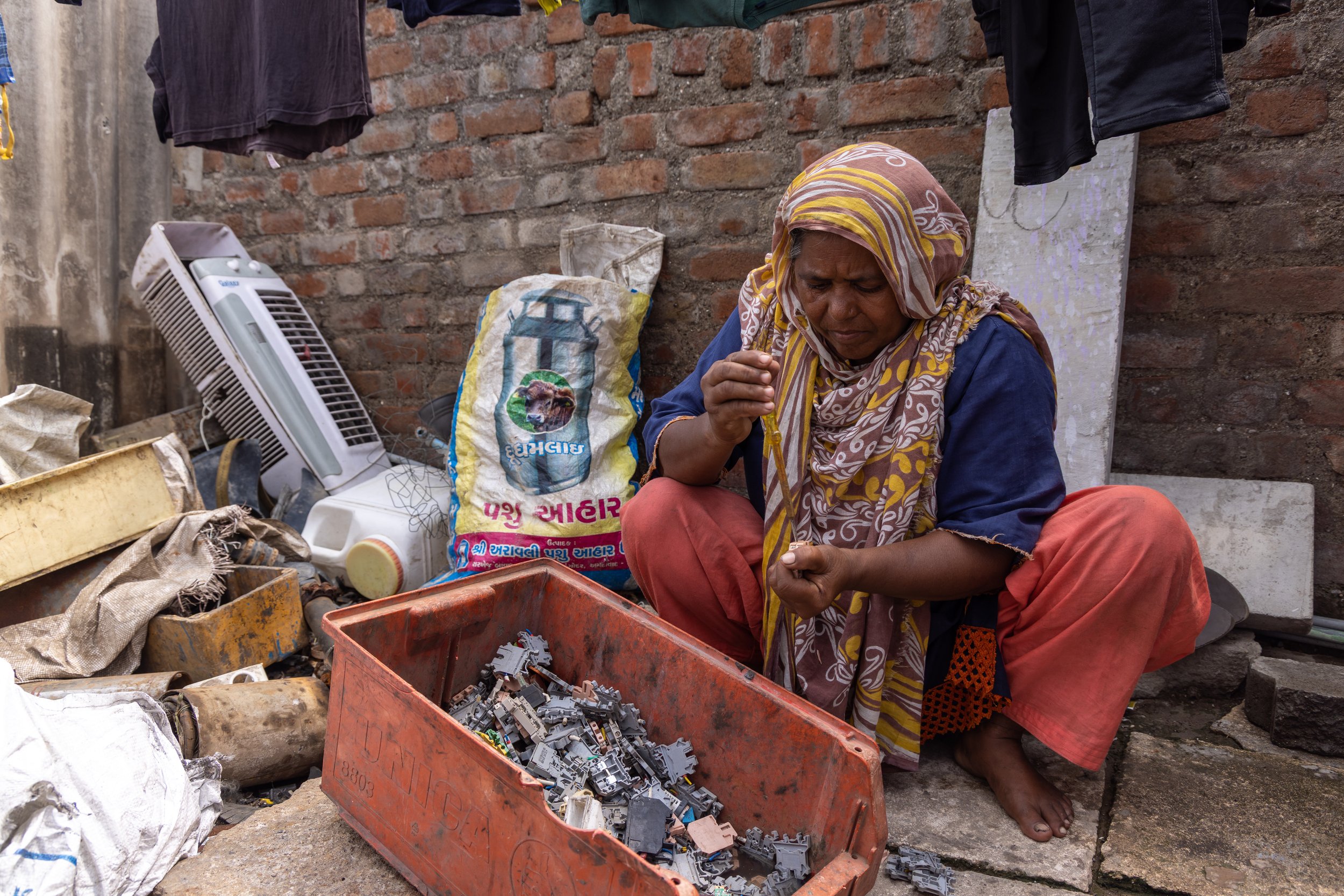
For many women involved in downstream ship recycling, there is no clear separation between workplace and home. Scrap materials are processed outside or inside their homes, meaning that dust, grease, chemicals and sharp fragments can become part of the environment where their families live.
Thirty-five-year-old Gitaben Maheshbhai Sumera, from Street Number 8 in Shantinagar, is one of the women processing plastic and ship-derived scrap materials from home. Before participating in SEWA’s Occupational Health and Safety and Persistent Organic Pollutants training, she says she was largely unaware of the risks associated with prolonged exposure to these materials.
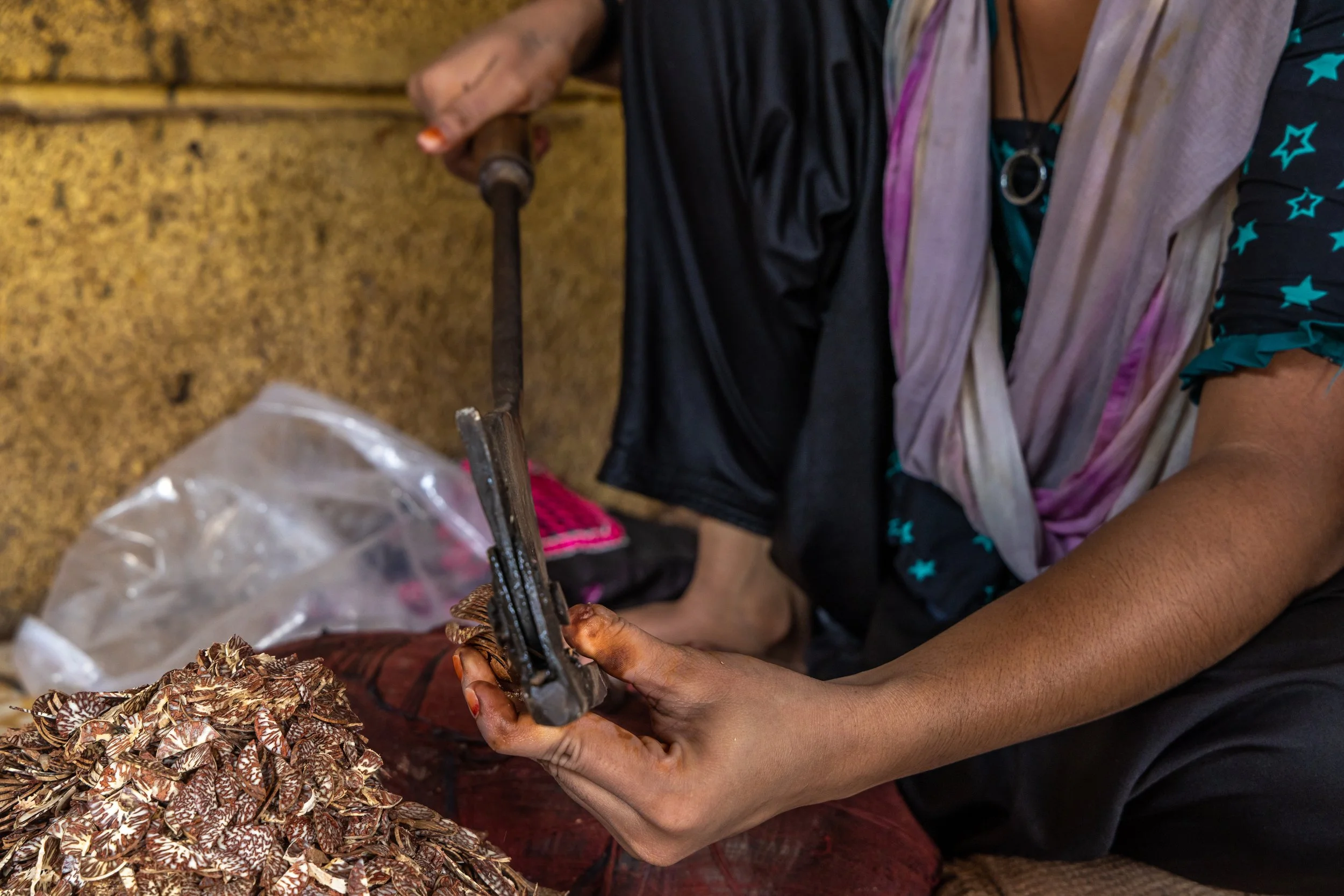
After finishing work, it was common to move directly on to cooking, cleaning and other household activities – without changing clothes or thoroughly washing first. Through the training, Gitaben learned that dust and chemical residues can remain on hands, clothes and skin, potentially exposing not only the worker herself, but also children and other family members.
Today, she has changed her daily routine. After handling scrap, Gitaben washes her hands thoroughly with soap, cleans exposed areas of her body and changes out of her work clothes before continuing with household activities. The knowledge has also travelled beyond her own home: she now encourages other women in her neighbourhood to follow the same practices and explains why hazardous materials should be kept away from the household environment.
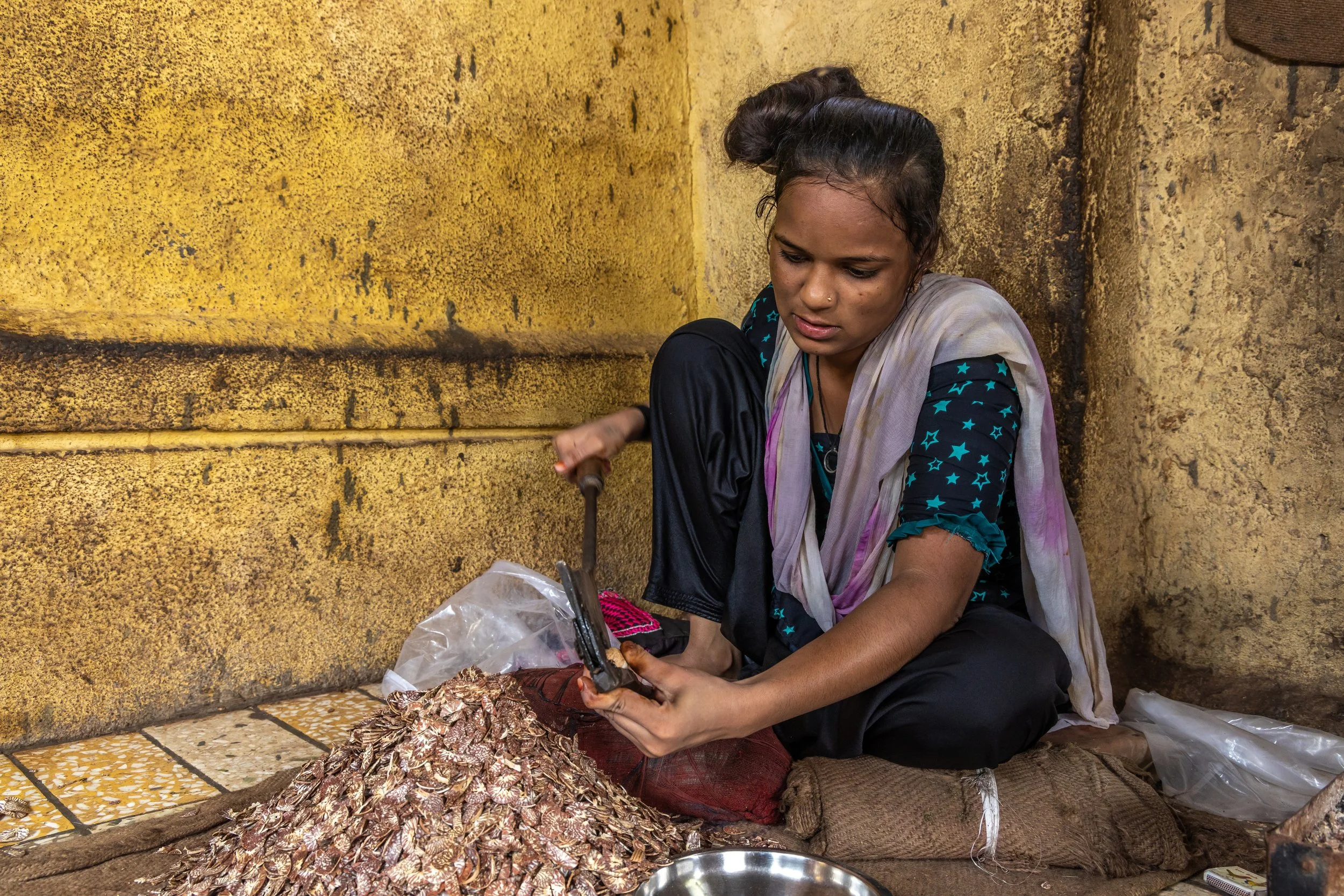
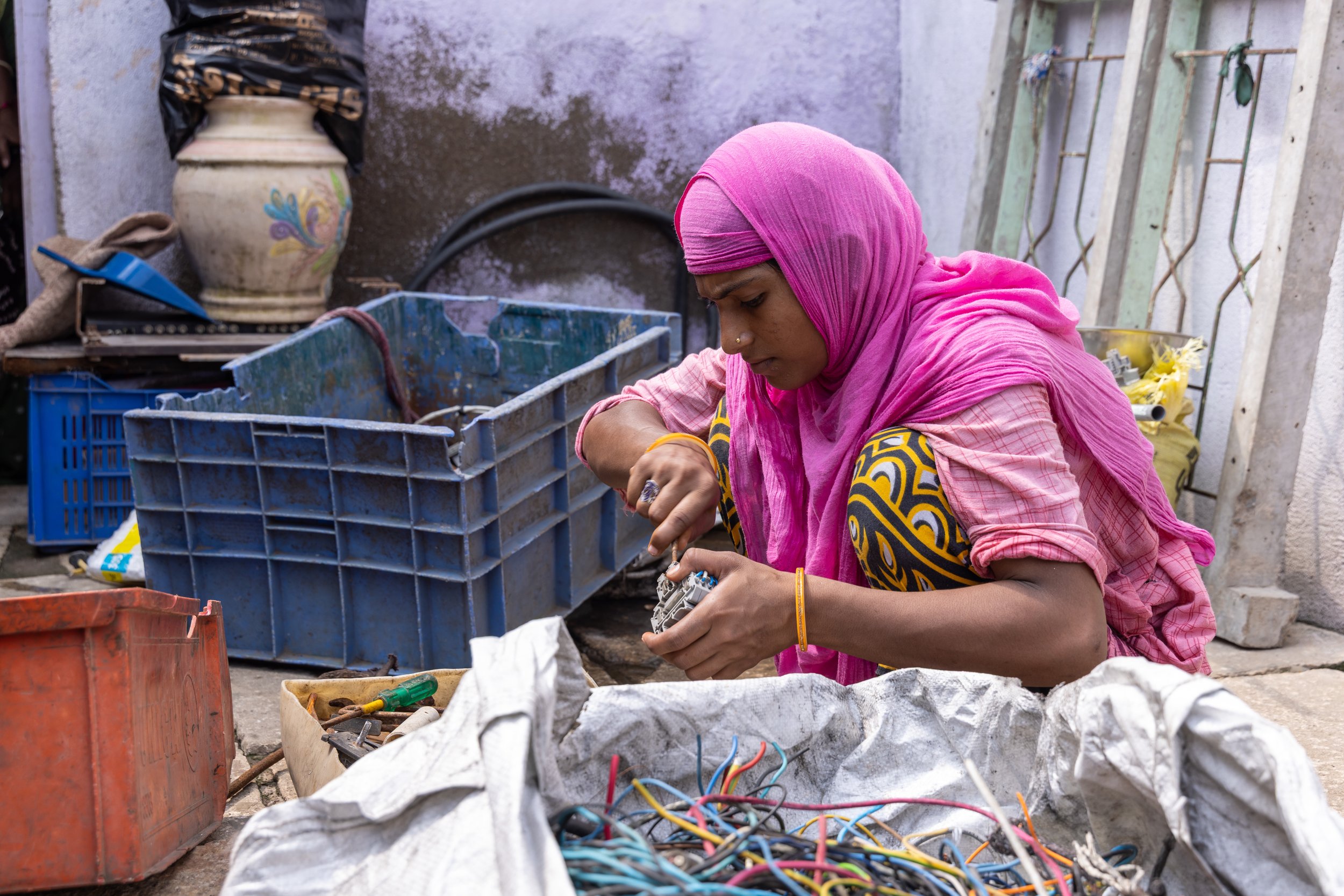
For another home-based ship-scrap worker in Akwada, the same training led to a practical change in how she organises her workplace. Previously, scrap was placed directly on the ground, exposing the area around her home to rust, dust, grease and sharp pieces of metal. During the monsoon, damp ground made both contamination and the handling of materials even more difficult.
A tarpaulin sheet provided through the project now creates a simple boundary between the scrap and the household environment. Materials can be placed on the sheet while she works and covered or collected afterwards, helping her keep the workspace cleaner, safer and more organised.
Neither changing clothes nor putting down a sheet may seem like a major intervention. But in a home that is also a workplace, these small changes can significantly reduce the everyday exposure of workers and their families to potentially hazardous materials.
For women like Gitaben, the training has made occupational safety something practical – knowledge that can be applied every day to protect both their own health and the people around them.
Related stories

STORIES FROM OUR PRIORITY AREAS
All · Children & youth · Music & culture · Health & research · Climate action · Social impact investment