
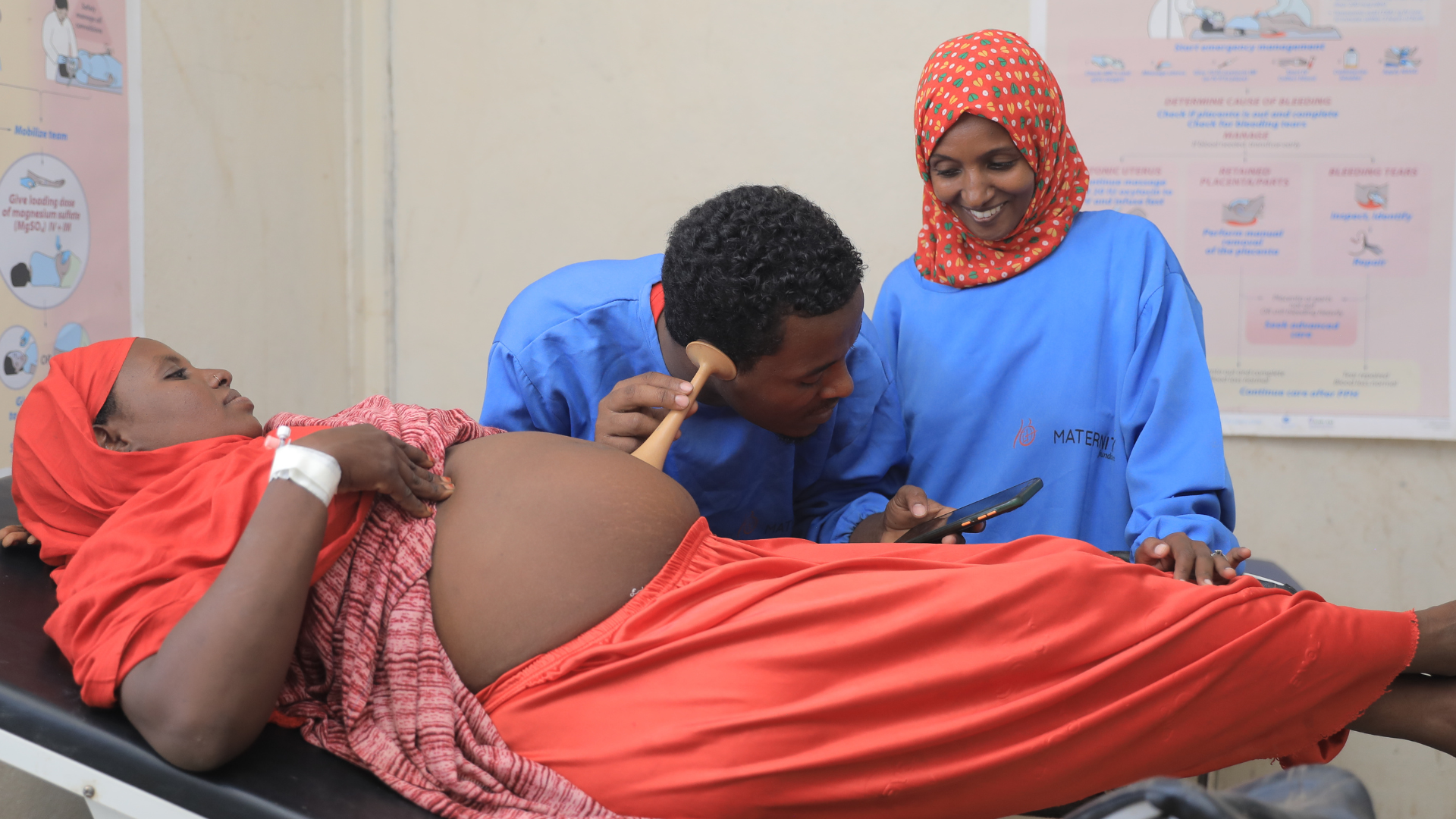
Across Ethiopia’s Afar and Somali regions, many communities live far from hospitals and advanced medical care. In these settings, skilled midwives are often the difference between life and death for mothers and newborns.
To strengthen the quality of maternal and newborn care, the Ethiopian government—supported by Maternity Foundation, UNICEF, and other partners—has introduced the Catchment-Based Clinical Mentorship (CBCM) programme. The programme pairs less experienced midwives with skilled mentors, providing hands-on training and guidance directly in health facilities where care is delivered.
Through practical coaching, clinical supervision, and digital learning tools such as Maternity Foundation’s Safe Delivery App, midwives are gaining the skills and confidence they need to manage complications and provide lifesaving care.
Across remote communities, the impact of this mentorship is already being felt.
A Newborn’s First Breath
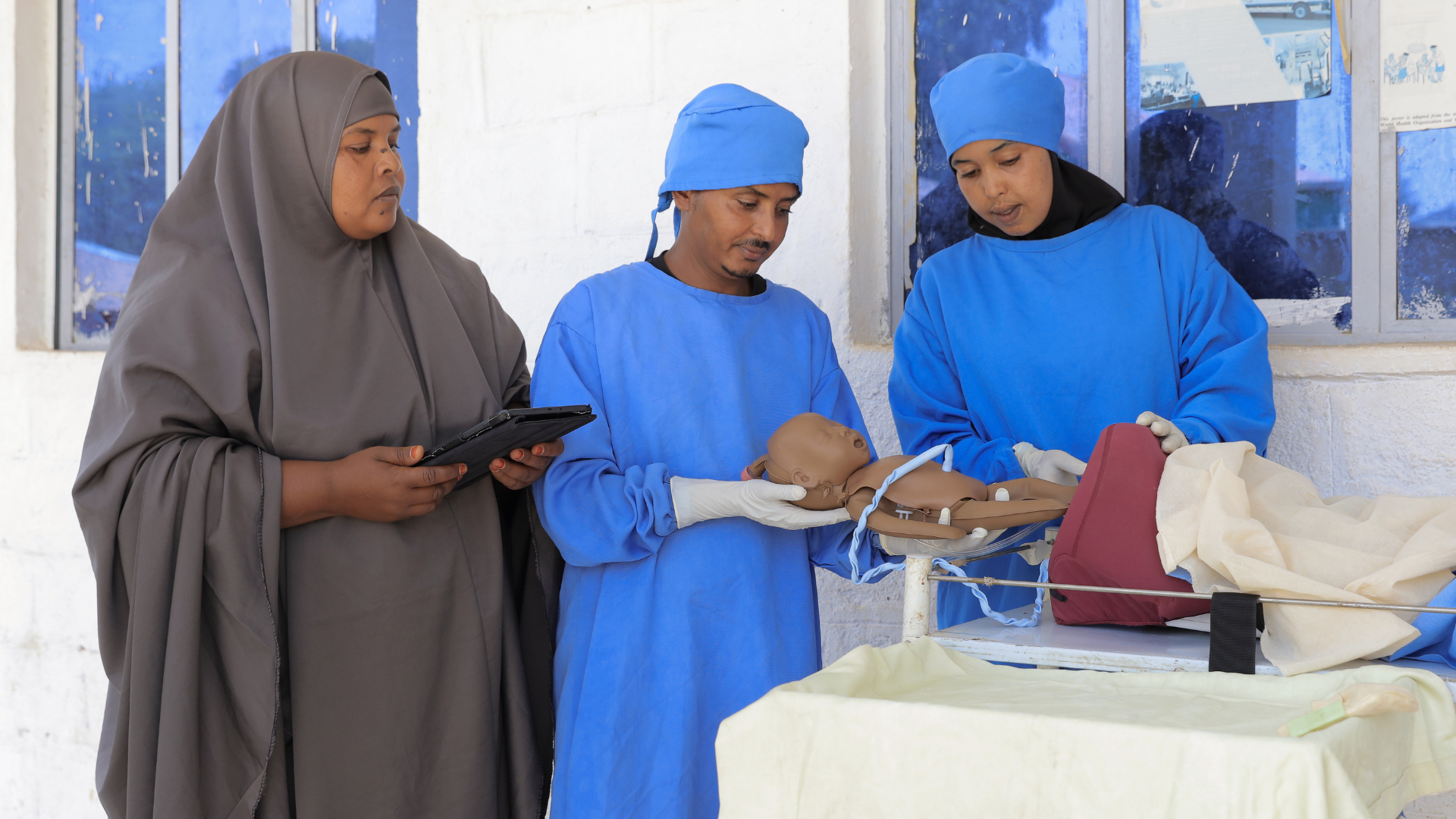
One evening in April at Dudum’ad Health Centre in Ethiopia’s Somali region, a midwife faced a critical moment. A woman in labour had just delivered her baby, but something was wrong. The newborn was not breathing, and his skin had turned pale.
In a region where neonatal mortality rates remain high, the family immediately feared the worst.
But the midwife had recently completed training through the CBCM programme. Drawing on the newborn resuscitation techniques she had practiced—and supported by guidance from the Safe Delivery App—she quickly clamped the cord and moved the baby to the newborn corner for emergency care.
As she worked to revive him, the room filled with cries from the family who believed the baby had died.
Then, suddenly, a sound broke through the noise. The baby cried. His skin colour improved and his heartbeat strengthened. The despair that had filled the room turned instantly into relief and celebration.
To ensure the newborn’s continued recovery, the midwife arranged an immediate transfer to a hospital where the baby received further care overnight.
Reflecting on the experience, she explained that before the mentorship programme and the Safe Delivery App, she would not have been able to manage such a case.
Building Confidence to Manage Complex Care
In another rural health centre in the Somali region, a young midwife also experienced how mentorship can transform clinical confidence.
Through the CBCM programme, she received training not only in obstetric emergencies but also in managing complications related to Female Genital Mutilation (FGM)—a practice that continues to affect many women in the region.
One day, she faced a situation she had only studied during training: performing a deinfibulation procedure for a woman affected by FGM.
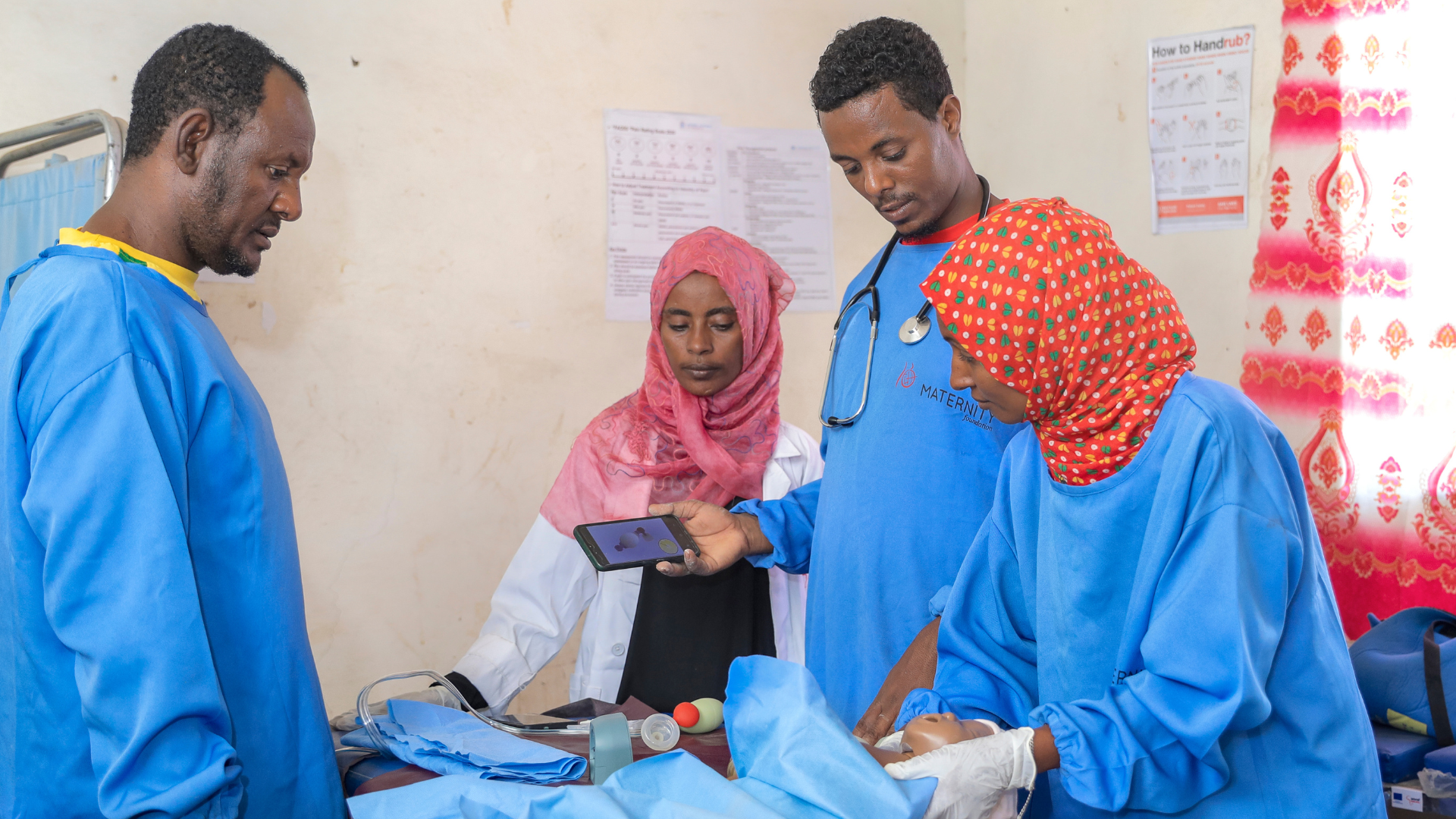
Although she understood the procedure in theory, she had never performed it herself. Unsure how to proceed, she contacted her mentor.
Together they reviewed the step-by-step guidance in the Safe Delivery App. With her mentor’s support and the app as a reference, she successfully carried out the procedure.
The experience marked an important turning point. What once felt intimidating had become manageable, and the young midwife now felt prepared to support other women facing similar complications.
Saving a Child – and Raising Awareness
For Mohammed, a midwife and mentor in the Somali region, the CBCM programme has strengthened not only his clinical skills but also his commitment to community change.
One case in particular left a lasting impression.
An eight-year-old girl was rushed to the health facility after undergoing FGM. She was bleeding heavily and her condition was critical. Mohammed acted immediately, stabilising the child and preventing what could have been a fatal outcome. While relieved that her life was saved, the experience reinforced the urgent need for awareness and education within the community.
Today, Mohammed works not only as a clinician but also as an advocate. He educates families, community members, and fellow health workers about the dangers of FGM and the importance of protecting girls from harmful practices. He believes that real change will require engaging entire communities—including men—to challenge long-standing beliefs.
Skilled Midwives Saving Mothers’ Lives
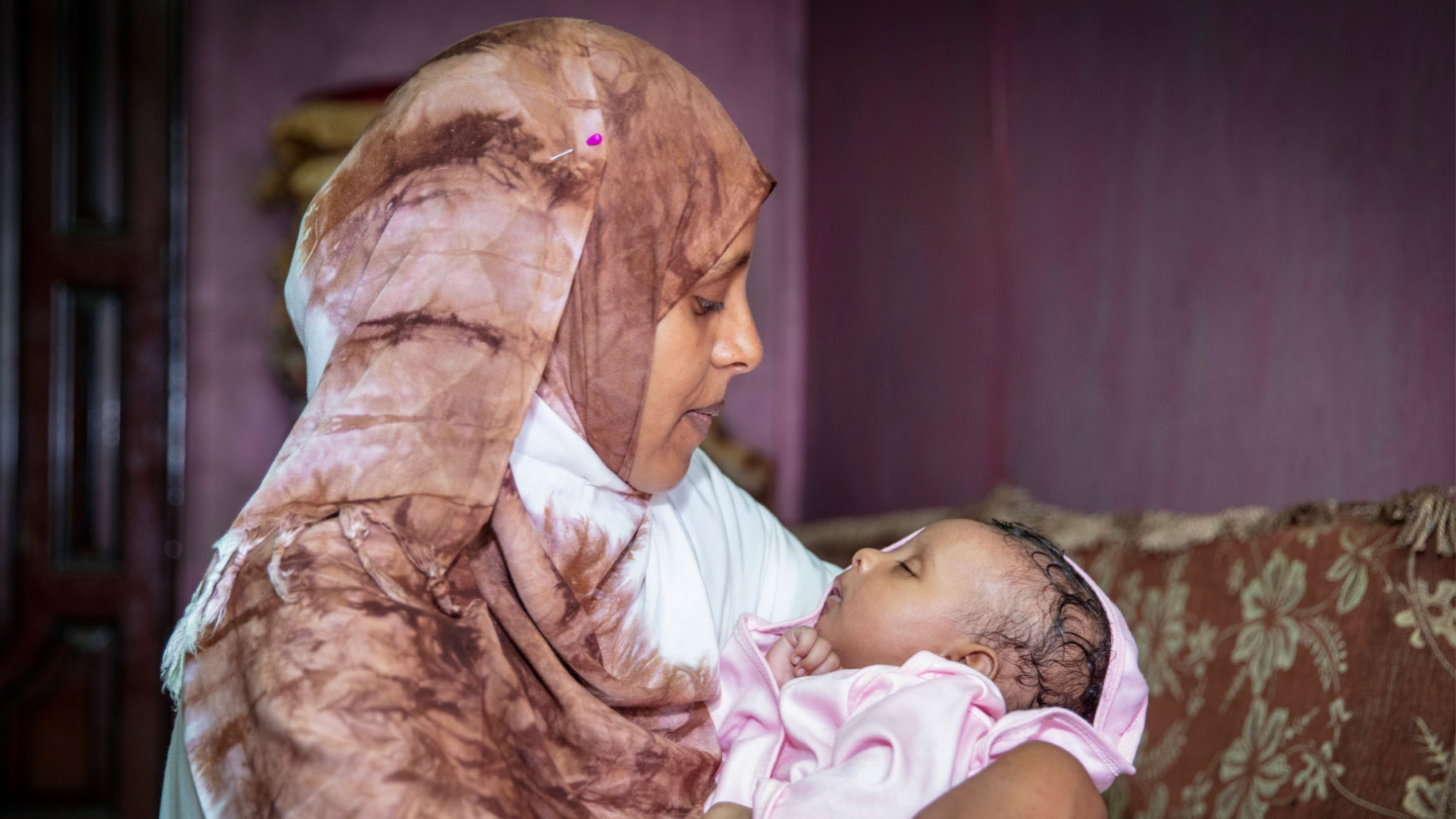
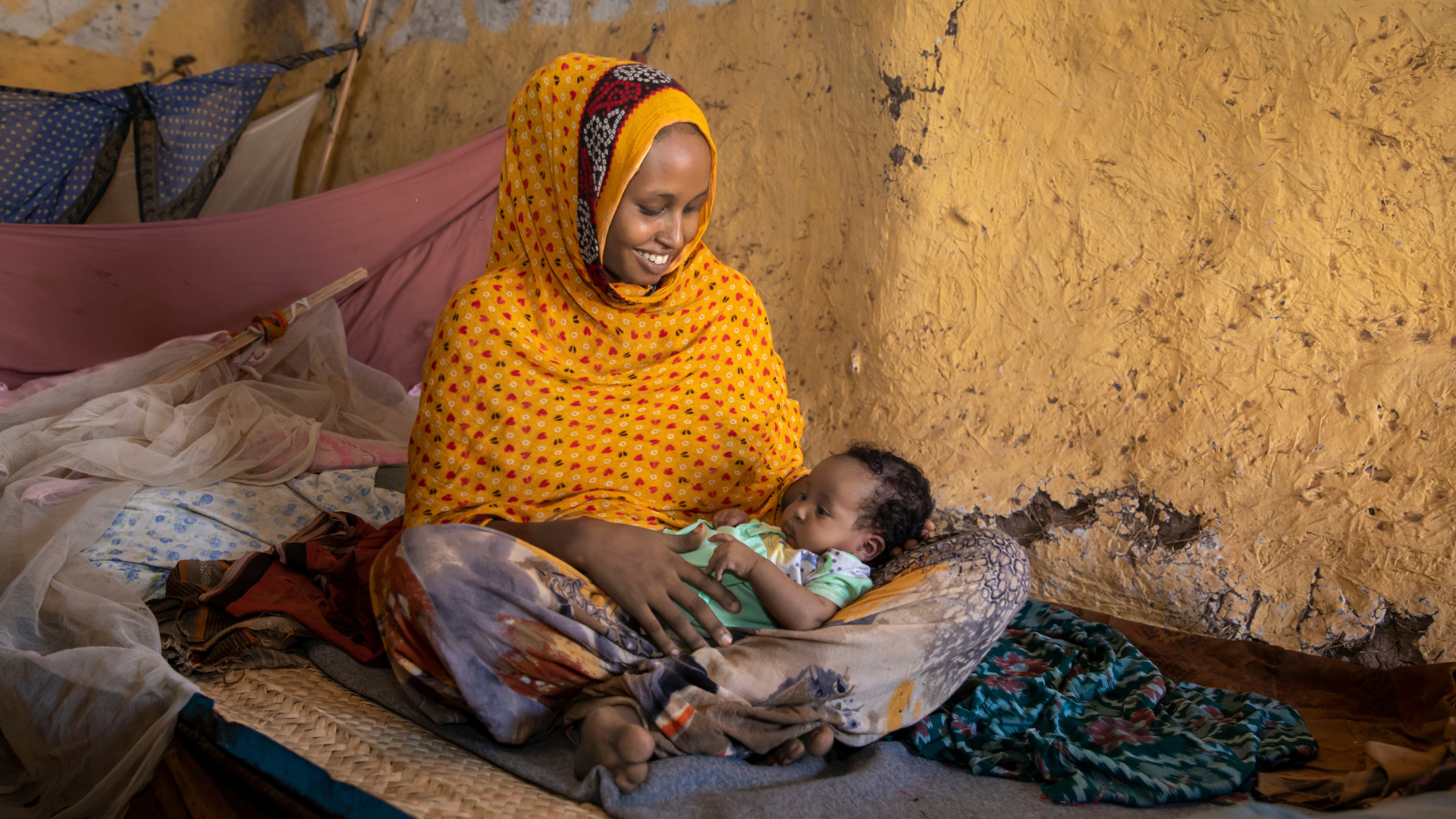
In the village of Togoshale near the Somaliland border, Hayat Hassen has witnessed the difference skilled midwives can make.
As a mother of four, she has experienced both the risks of childbirth and the benefits of improved maternal care at Togoshale Health Centre.
During two of her deliveries, she suffered from postpartum haemorrhage, one of the leading causes of maternal death worldwide. But on both occasions, trained midwives responded quickly. Among them was Mohammed, whose experience and training through the CBCM programme enabled him to recognise the danger signs immediately and administer lifesaving treatment.
His skills were also critical when Hayat’s newborn experienced birth asphyxia. Acting quickly, he performed the necessary interventions to revive the baby. For Hayat, these moments are unforgettable. The care she received not only saved her life—it allowed her to watch her children grow.
Mentorship That Multiplies Impact
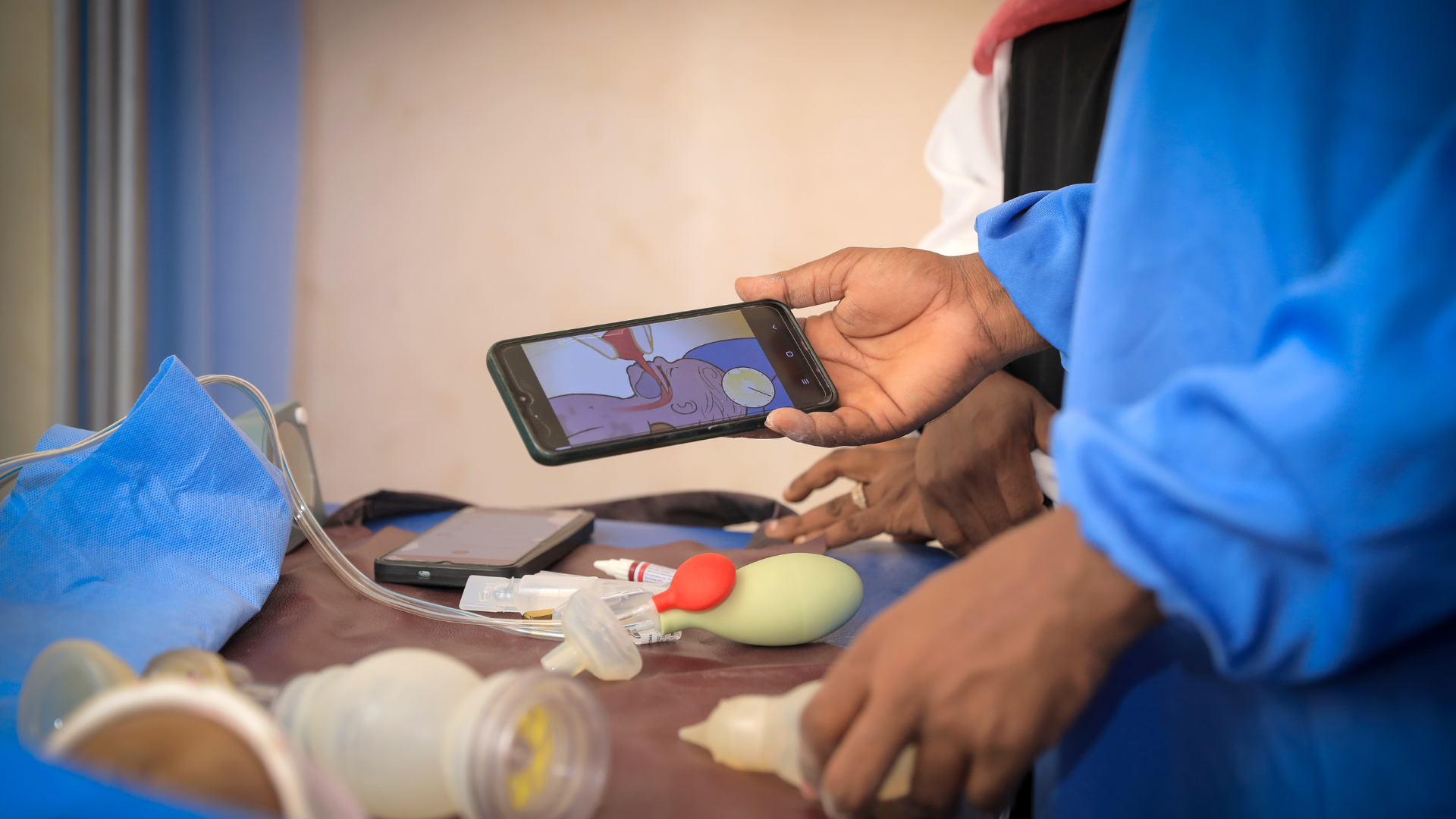
In the Afar region, 26-year-old midwife Kemal Hassan is now part of the growing network of mentors created through the CBCM programme.
Based in Asayita, he supports six midwives across the Afambo district, helping them build practical skills and confidence in managing childbirth complications.
Newly trained midwives often arrive in health facilities with strong theoretical knowledge but limited hands-on experience. Through mentorship, Kemal helps bridge that gap. By identifying areas where mentees need additional support, practicing procedures together, and reinforcing knowledge through the Safe Delivery App, he helps ensure that more women and newborns receive safe and timely care.
For one of his mentees, the change has been dramatic. Complications that once felt overwhelming—such as severe bleeding during childbirth—are now situations she can manage confidently.
Strengthening Care Where It Is Needed Most
Across Ethiopia’s remote regions, the Catchment-Based Clinical Mentorship programme is strengthening the skills, confidence, and resilience of midwives working on the frontlines of maternal and newborn health.
By combining hands-on mentorship, digital learning tools, and targeted training on critical issues such as FGM, the programme is building a sustainable network of skilled healthcare professionals. And with every midwife trained, every complication managed, and every newborn revived, the impact grows. Because in places where access to healthcare is limited, empowering midwives doesn’t just improve care.
It saves lives.
Related stories


STORIES FROM OUR PRIORITY AREAS
All · Children & youth · Music & culture · Health & research · Climate action · Social impact investment